How could “Deferred Payment” means Deferred Dreams Universities are supposed to be fountains of knowledge, not fountains of overdue bills. Yet, according to the National Association of College and University Business Officers (NACUBO, 2024), 41% of U.S. colleges report a sharp rise in delinquent tuition accounts. That’s not just a headache for bursars—it’s a ticking time bomb for budgets. Unlike …
Premiums, Claims & Catch-Up: Why Receivables Are the Hidden Backbone of Insurance
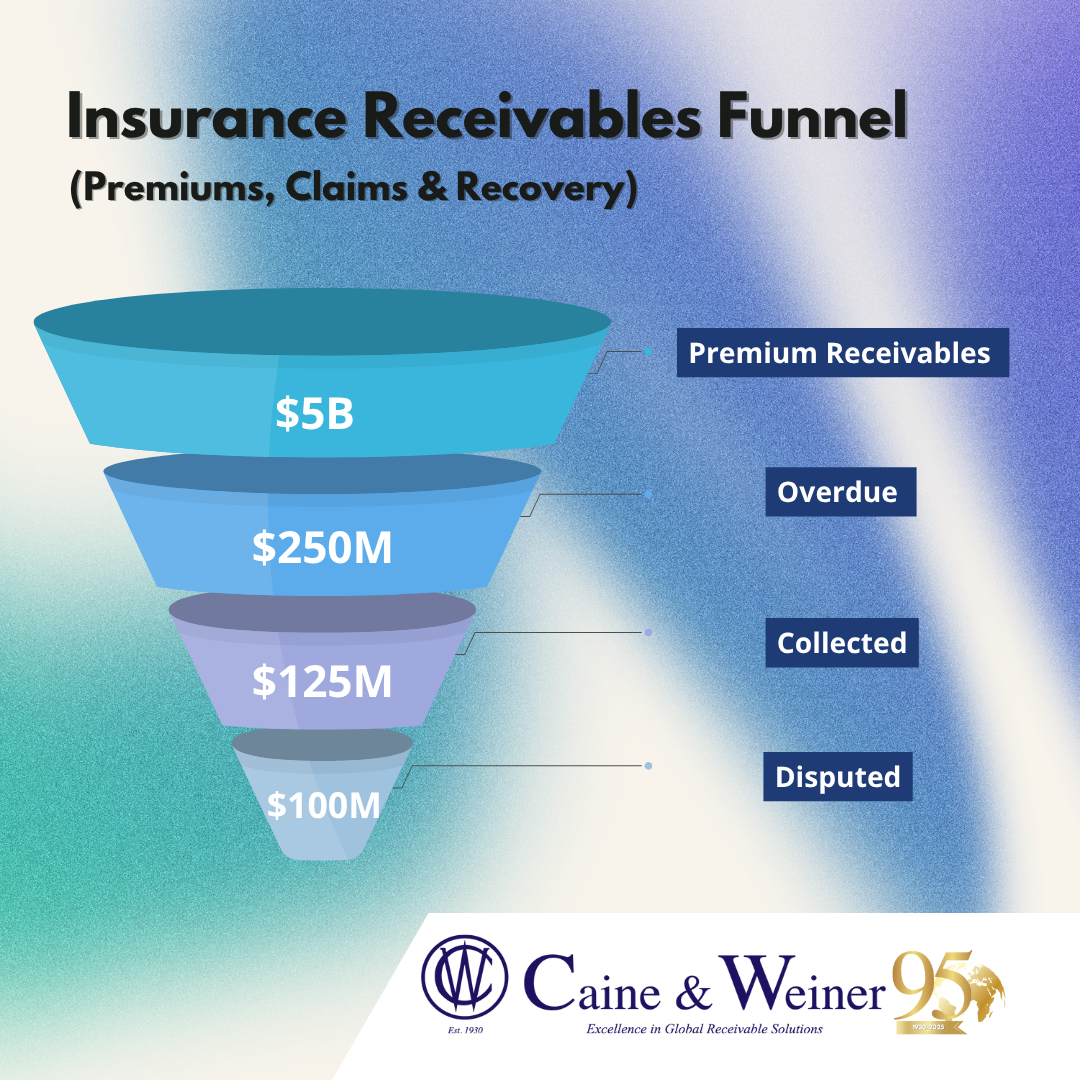
The Case of the $250 Million Delay Imagine this: Insurer X processes $5B in annual premium receivables and holds $200M in reinsurance recoverables. A cluster of delayed payments hits — 5% of premiums are overdue by 60 days, and 2% slip into long-term disputes. Even if half is eventually collected, the insurer faces a $250M cash flow gap, tying up …
Why 73% of Manufacturers Say Cash Flow Limits Innovation
Innovation Takes Fuel—And Right Now, It’s Running on Empty Ask manufacturers about their biggest pain point, and you’ll hear: supply chain chaos, labor shortages, raw material costs. But dig deeper and a quieter villain emerges: cash flow constraints. The National Association of Manufacturers (NAM) reports that 73% of U.S. manufacturers say late B2B payments delay innovation and R&D. Translation: fewer …
When 5.7% Isn’t Just Dust: The Quiet Delinquency Boom in U.S. Mining
The Bedrock Is Shifting For decades, mining has been the economic backbone of regions across the U.S. — a sector known for its grit, capital intensity, and strategic importance. From copper that powers EVs to rare earths critical for semiconductors, mining has always felt essential. And when something feels essential, financial risk tends to get underestimated. But lately, the numbers …
Employee Wellness: Why Mental Health Support Is a Business Imperative
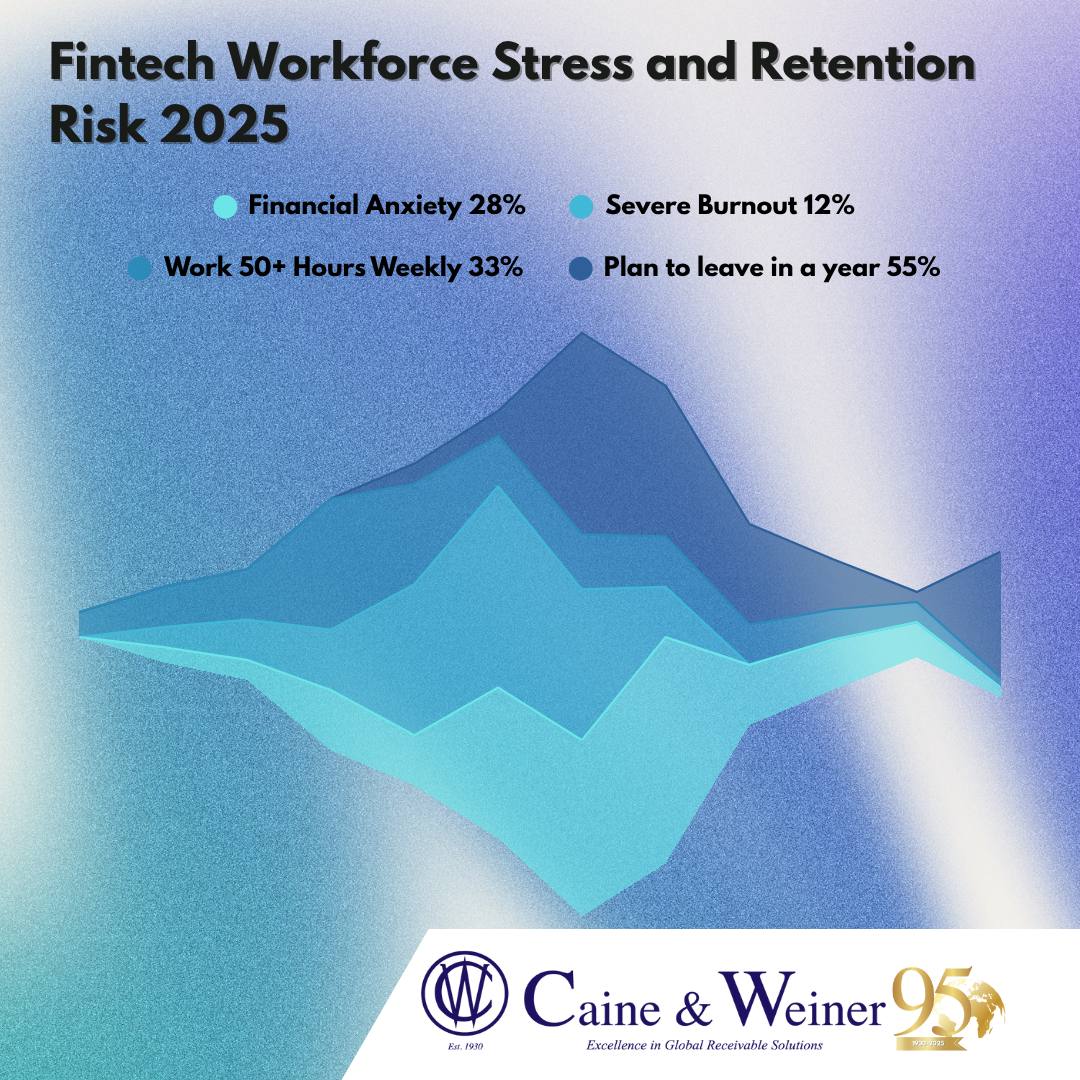
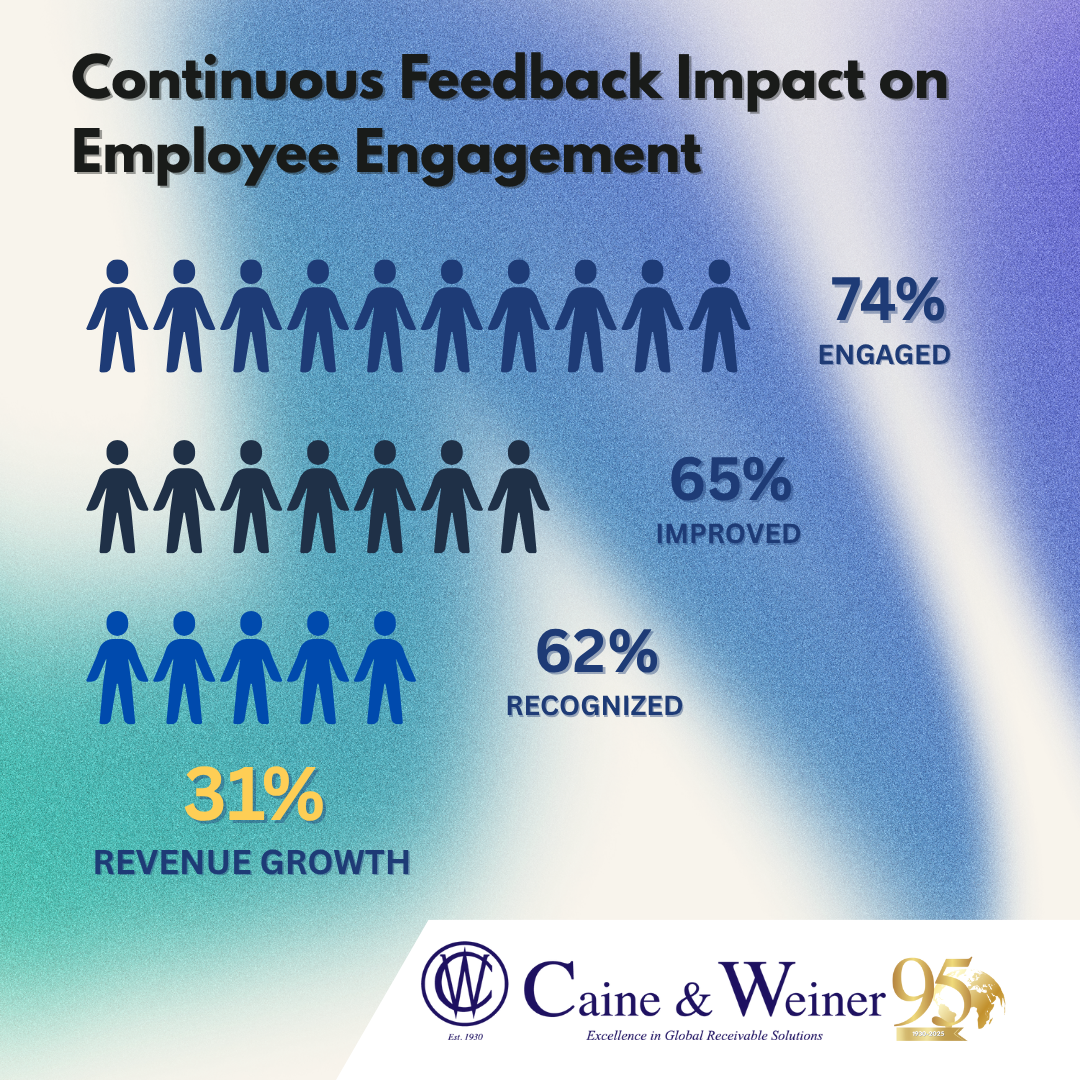
Featuring Caine & Weiner’s people-first perspective Wellness Is the New Bottom Line Once seen as “nice-to-have,” workplace wellness programs have become core to business strategy. Research by the American Psychological Association shows that employees who feel supported in their mental health are 3.5x more likely to be engaged at work—and 40% less likely to leave. Yet burnout is rising: Nearly …
Finance Under Pressure: How Payment Delays Threaten Stability
The Delayed Payment Dilemma The finance sector thrives on precision, predictability, and trust—but late payments are throwing a wrench in the works. According to Atradius and PYMNTS, 56% of finance-sector companies report increased late B2B payments in 2024, with average invoice terms stretching past 70 days. That’s up nearly 20% from pre-pandemic norms. This delay is more than a nuisance. …
Tech Moves Fast—But Cash Flow Can’t Lag Behind
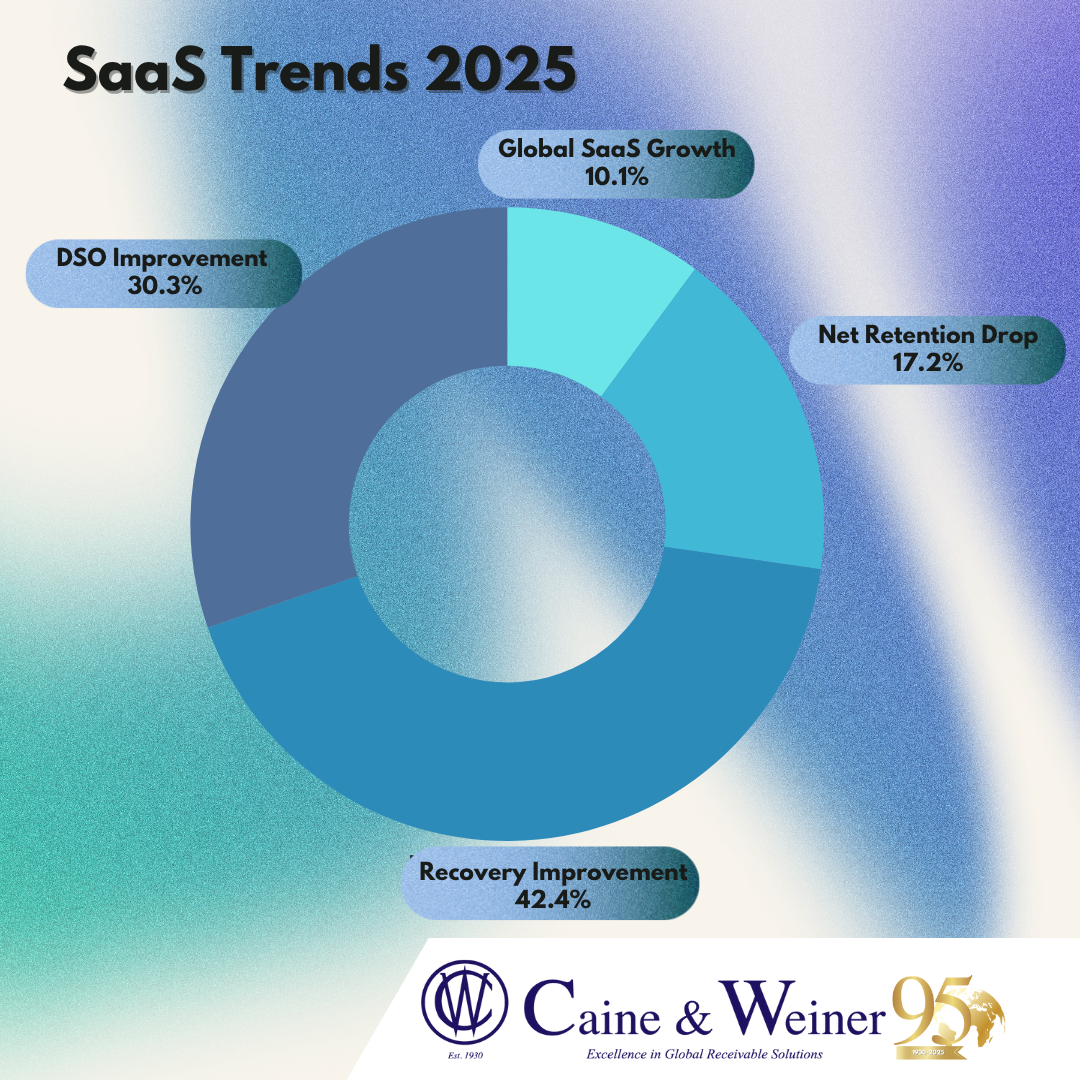
The Fast Lane Problem In tech, speed is survival. From cloud infrastructure to SaaS platforms, IT companies thrive on rapid innovation. But while revenues have surged 14% year-over-year (Gartner, 2024), another number is rising too: overdue invoices. The Credit Research Foundation found that 54% of U.S. tech firms reported more late B2B payments in 2024, driven by client budget freezes, …
Fintech’s Double-Edged Sword: 70% Growth, But 47% Struggle with Collections
Growth is Beautiful. Delinquencies? Not So Much. Fintech is the darling of Wall Street pitch decks. Sleek apps, cool UX, and triple-digit growth rates. According to PwC, some segments like BNPL (Buy Now Pay Later) grew 70% year-over-year. Cue the confetti. But here’s the hangover: TransUnion reports 47% of BNPL borrowers missed at least one payment in 2022. That’s nearly …
Manufacturing Workforce Gaps: How Retention Impacts Supply Chains
Featuring Caine & Weiner’s people-first perspective The Looming Workforce Crisis By 2030, the U.S. manufacturing sector could face a shortage of 2.1 million skilled workers, according to Deloitte and The Manufacturing Institute. That’s not a slow leak—it’s a talent exodus that threatens to derail production, delay orders, and squeeze profit margins industry-wide. Factories are already feeling the pressure: unfilled job …
Wellness Business Case—Why Keeping Talent Pays Dividends
Burnout by the Numbers Employee burnout is no longer a fringe HR issue—it’s a business crisis. Gallup reports that 50% of U.S. employees feel burned out at least part of the time, with nearly 1 in 4 experiencing it “very often or always.” Burnout doesn’t just harm employees; it directly impacts organizations’ bottom lines. The World Health Organization (WHO) estimates …