
Recurring revenue has become one of the most attractive business models in the modern economy.
Subscription services, software platforms, digital infrastructure providers, and service-based technology companies increasingly rely on predictable monthly or annual payments.
Metrics like Annual Recurring Revenue (ARR) and Monthly Recurring Revenue (MRR) have become central indicators of growth and valuation. Investors, executives, and analysts use these metrics to measure long-term stability and scalability.
But recurring revenue models rely on a critical assumption: customers actually pay on schedule. Without strong accounts receivable management, the predictability promised by subscription revenue can begin to erode.
According to data from SaaS Capital, SaaS companies with strong billing discipline typically maintain DSO between 30 and 45 days. When DSO rises above that range, it often signals operational friction in billing processes or declining payment reliability.
The difference may appear small. But even a 15-day increase in payment timelines can tie up millions of dollars in working capital for mid-sized subscription companies.
For organizations managing large recurring customer bases, these delays accumulate quickly. Consider a SaaS company generating $50 million in ARR.
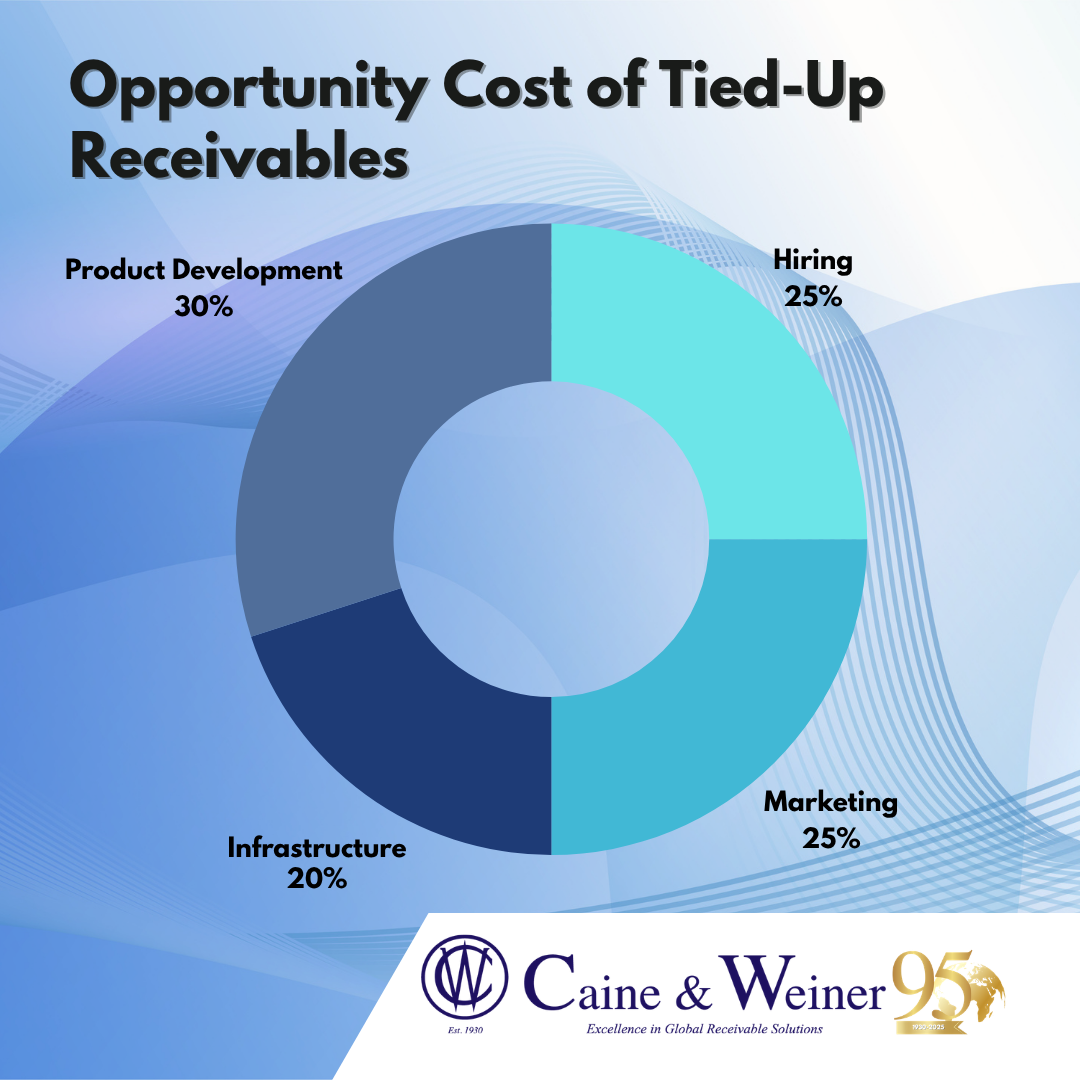
If average payment timelines extend from 30 to 60 days, the business may effectively carry an additional $4 million or more in outstanding receivables at any given time. That capital could otherwise support hiring, product development, marketing expansion, or infrastructure improvements.
Instead, it remains tied up in unpaid invoices. Another challenge arises when payment delays affect customer lifecycle management.
Accounts that fall behind on subscription payments may continue receiving service access or support resources while outstanding balances accumulate. If payment issues persist, the situation can escalate into churn risk.
Research from McKinsey & Company highlights that subscription-based businesses with strong billing automation and proactive collections often achieve retention rates up to 15% higher than companies relying on manual billing processes.
Why?
Because proactive receivables management keeps customers engaged in the financial relationship as well as the service relationship.
Clear billing schedules, automated payment reminders, and integrated payment platforms reduce friction for customers while protecting the provider’s financial predictability. Many companies also use data analytics to identify accounts showing early signs of payment stress.
Small changes in payment behavior—such as invoices that gradually shift from 30 to 45 days—can signal broader financial pressure within a customer organization.\

Addressing these issues early helps prevent larger disruptions later. The connection between accounts receivable and recurring revenue is ultimately about trust.
Customers trust providers to deliver consistent service. Providers trust customers to honor the payment structure that makes that service possible.
When both sides maintain that discipline, recurring revenue truly becomes predictable.
But when payment behavior drifts, even the strongest subscription model can begin to feel unstable.
For companies operating in the recurring revenue economy, effective receivables management is not just an administrative function.
It is a critical part of sustaining long-term growth.