

During the quarterly leadership meeting, the numbers look strong.
Annual Recurring Revenue (ARR) is growing. Customer acquisition is healthy. Renewal rates are stable. On paper, the business is performing exactly as planned. Then finance raises a concern: Cash feels tight.
This disconnect is more common than it seems. ARR reflects contracted revenue—not when cash actually arrives.
The Revenue-to-Cash Gap
In SaaS, there is often a measurable gap between:
- Contracted ARR
- Recognized revenue
- Cash collected
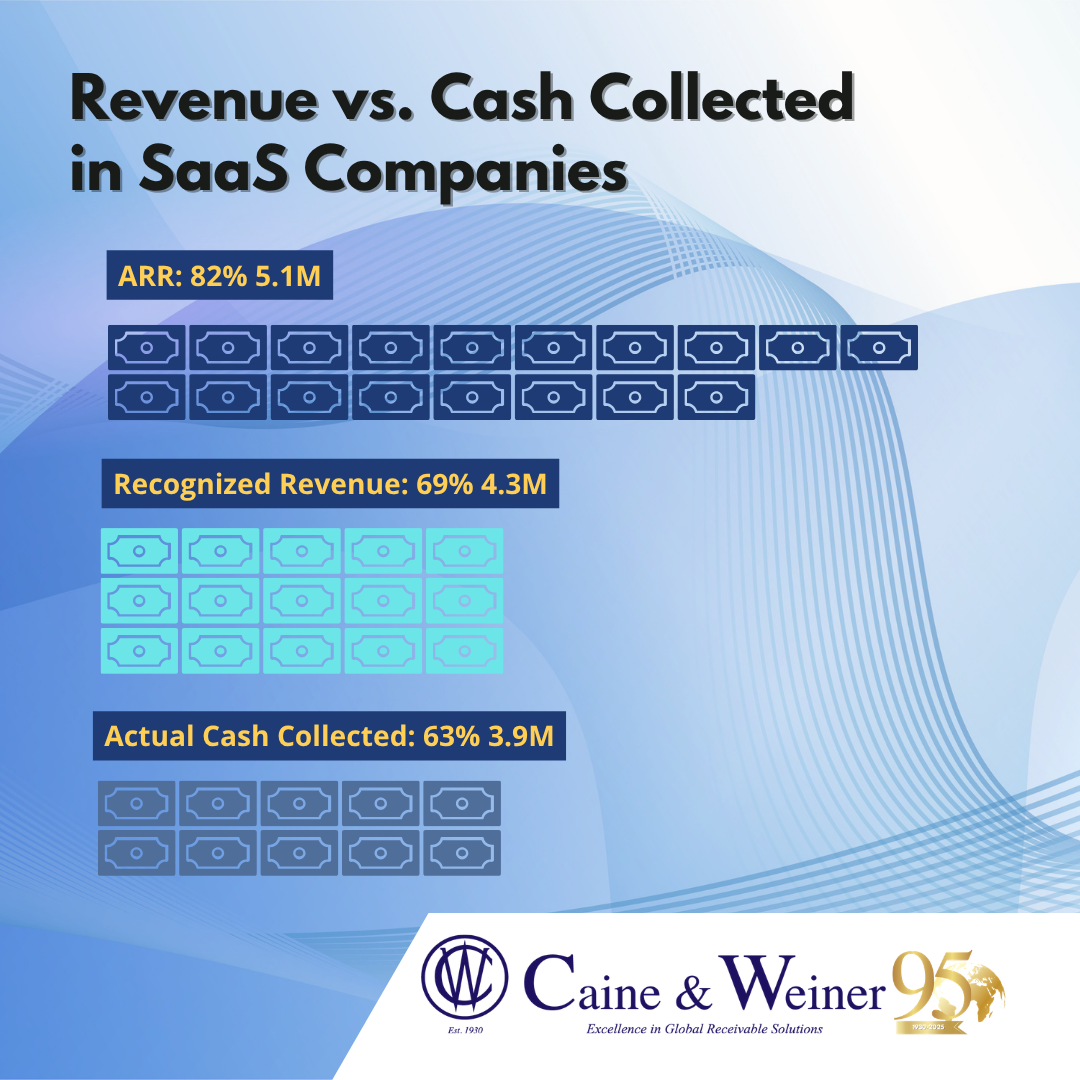
Industry benchmarks show:
- Companies typically recognize ~80–85% of ARR as revenue within a period
- But only ~60–70% is collected as cash on time
- The remainder sits in accounts receivable due to billing cycles or delayed payments
This creates a funnel effect: strong revenue at the top, but reduced cash at the bottom.
Even a 10–20% delay in collections can create meaningful liquidity pressure—especially as companies scale.
Payment Behavior Drives the Disconnect
The issue isn’t revenue—it’s timing.
Customers may sign annual contracts but pay:
- Monthly
- Quarterly
- Or later than agreed terms
As a result, cash inflow rarely matches revenue recognition.
Data across the SaaS sector shows:
- Days Sales Outstanding (DSO) typically ranges from 45 to 60+ days
- High-growth companies often see DSO increase as they scale
- Payment delays—not churn—are a leading cause of cash flow pressure
When payment timing slips, even slightly, the impact compounds across the business.
Growth Can Strain Cash Flow
As SaaS companies grow, focus naturally shifts to:
- Closing deals faster
- Expanding customer base
- Driving top-line revenue
But payment discipline can lag behind. Invoices may still get paid—but not always on time.
At the same time, expenses continue:
- Payroll
- Infrastructure
- Sales and marketing
- Product development
These costs don’t wait for collections.
When multiple customers delay payments, even by a few weeks, working capital can tighten quickly—forcing reliance on credit lines or reserves.
DSO: The Early Warning Sign
Finance teams monitor this through DSO.
- A 5–10 day increase in DSO can delay significant cash at scale
- Best-performing SaaS companies maintain DSO in the 40–45 day range
- Others drift beyond 60 days, increasing liquidity risk
Because DSO often rises gradually, it can go unnoticed until cash pressure builds.
Closing the Gap
Strong SaaS companies don’t just track revenue—they actively manage collections.
Key strategies include:
- Automated billing and reminders to reduce late payments
- Clear payment terms set at the contract stage
- Real-time visibility into invoice and payment status
- Customer-level tracking to identify slow-paying accounts early
Internal alignment also matters. Sales teams need visibility into the financial impact of extended terms, while finance teams must enforce consistent credit practices. Small exceptions—like informal extensions—can quietly accumulate into larger cash flow issues.
Revenue Is Not Cash
ARR remains a critical growth metric. But it doesn’t guarantee liquidity.
The most resilient SaaS companies ensure that cash flow keeps pace with revenue commitments—not just that revenue continues to grow. Because when ARR looks strong but cash feels tight, the issue usually isn’t performance.
It’s payment timing.