
The Subscription Promise Meets the Cash Reality
A SaaS CFO once described their business like a treadmill: steady pace, predictable rhythm, forward motion every month. ARR climbed. Renewals held strong. Dashboards glowed green.
But payroll still felt tight.
This is the paradox many SaaS companies face today. Subscription revenue is recurring—but cash flow often isn’t. According to the Credit Research Foundation, over 52% of SaaS companies experience delayed B2B payments, most commonly driven by billing disputes, usage disagreements, or churn-related contract friction.
The revenue exists. The timing doesn’t.
When Predictability Breaks Down
SaaS businesses are designed around predictability. Monthly recurring revenue, annual contracts, multi-year enterprise agreements—all meant to stabilize cash inflow. But as companies scale, complexity quietly creeps into billing.
Seat expansions mid-cycle. Usage-based overages. Annual renewals invoiced quarterly. Procurement approvals layered across departments. Each variable introduces delay.
And delays add up.
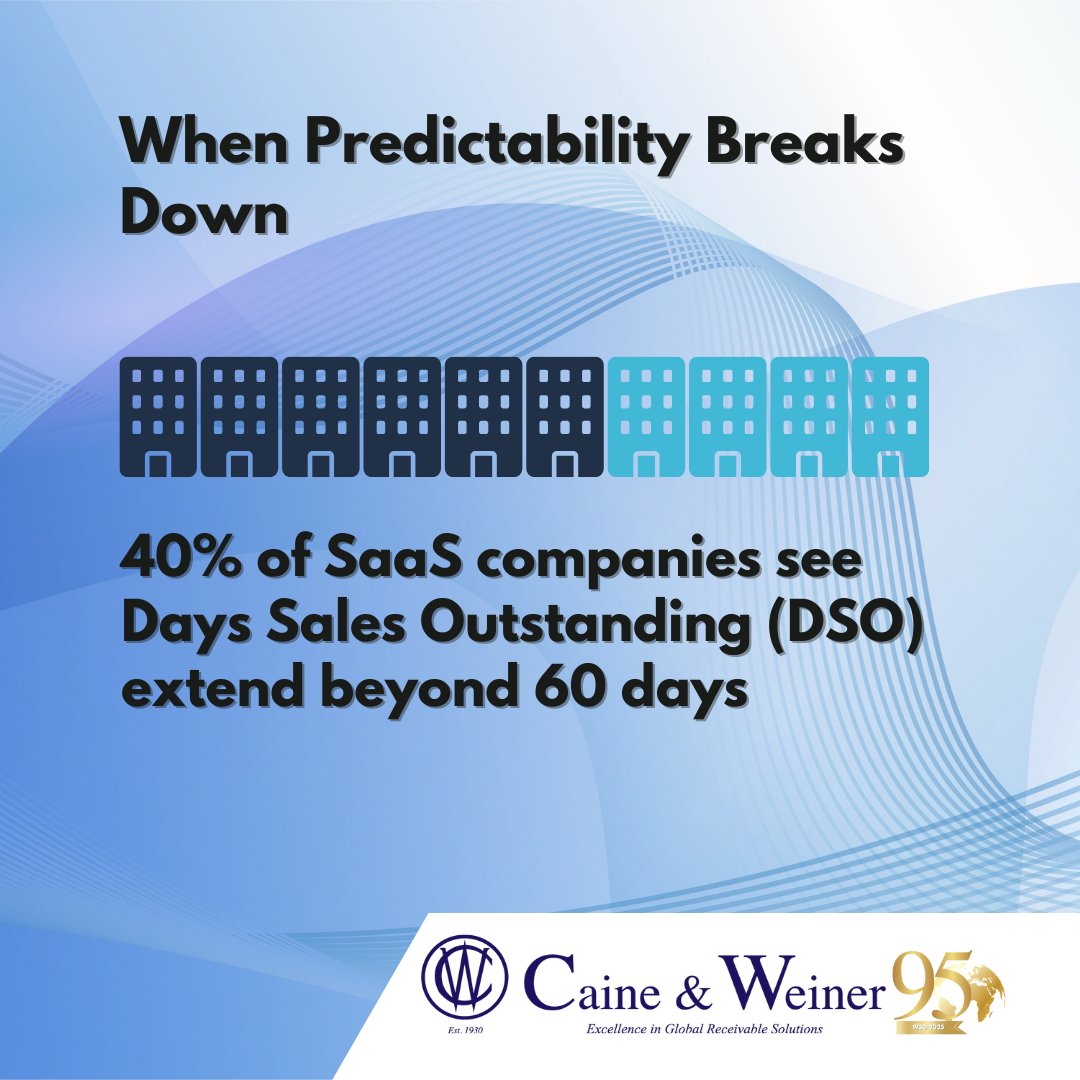
PYMNTS reports that nearly 40% of SaaS companies see Days Sales Outstanding (DSO) extend beyond 60 days, even while revenue grows. That gap between booked revenue and collected cash becomes a silent drag on growth.
The Cost of Late Cash
Late payments don’t just impact accounting—they reshape decision-making.
When cash arrives late:
- Hiring plans slow
- Product investments pause
- Forecasts become less reliable
- Investor confidence softens
None of this happens because the product failed or customers disappeared. It happens because cash flow fell out of sync with growth.

Why Customers Delay—Without Bad Intent
In most SaaS cases, late payments aren’t malicious. They’re procedural.
Enterprise buyers juggle multiple vendors, internal approvals, budget cycles, and compliance reviews. One disputed line item can stall payment for weeks. A missed purchase order reference can reset the clock entirely.
What starts as a five-day delay quietly stretches into thirty.
The Companies That Stay Ahead
High-performing SaaS organizations treat receivables as part of revenue operations—not a reactive task once invoices age. They monitor trends early, escalate professionally, and resolve friction before it becomes habit.
According to industry research, companies that intervene early in the payment cycle experience up to 45% higher recovery rates than those that wait (Credit Research Foundation).
Timing matters.
Where Caine & Weiner Fits
At Caine & Weiner, we help SaaS companies bring discipline to receivables without disrupting customer relationships. Our approach recognizes the nuance of subscription billing and the importance of brand trust—while ensuring revenue turns into usable cash.
Bottom Line: Recurring revenue only works when cash arrives on time. Growth deserves predictability—end to end.