
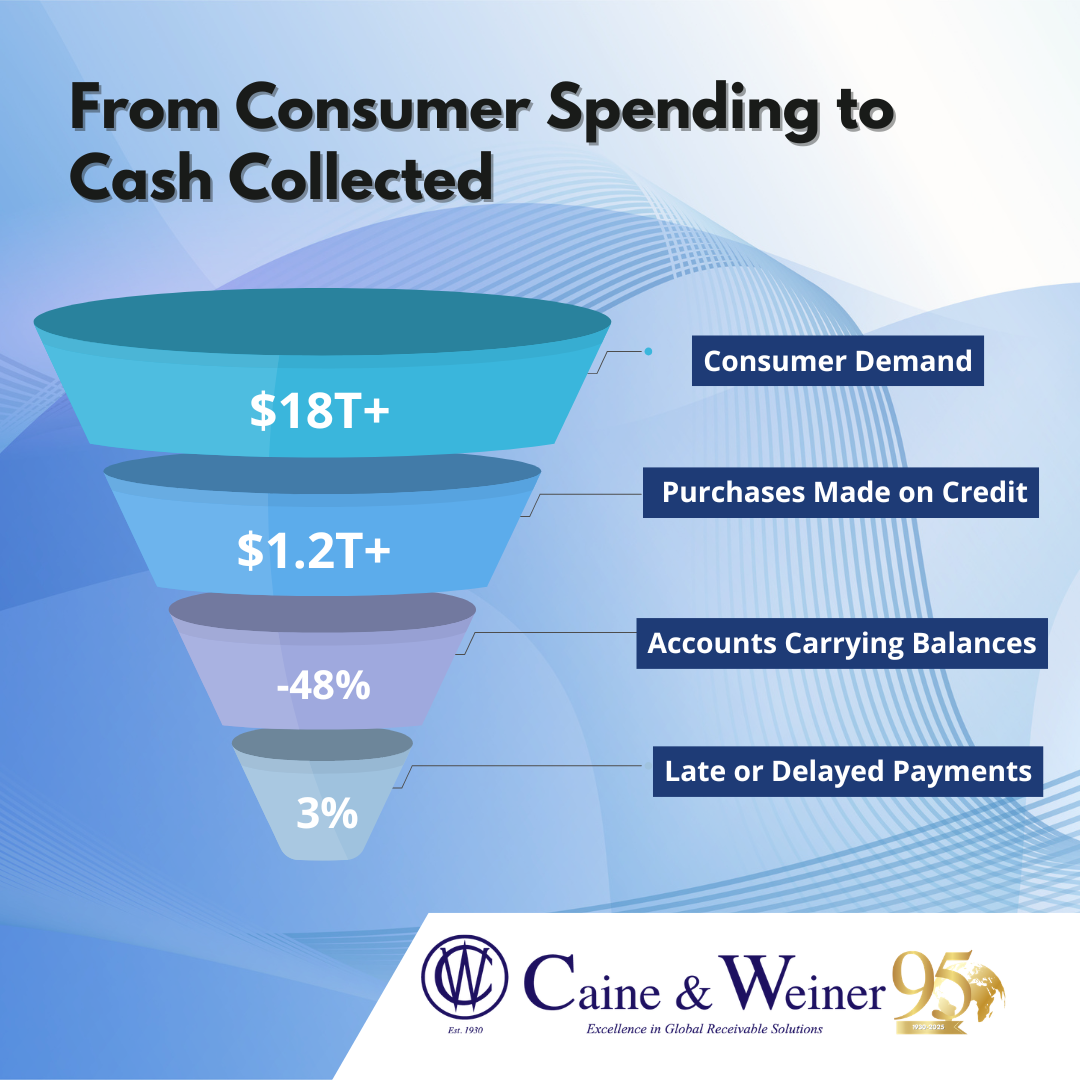
Walk through a busy retail district or scroll through online marketplaces today, and consumer activity appears strong. Stores are busy. E-commerce orders continue to grow. Promotional campaigns generate steady traffic. From a sales perspective, demand looks healthy. Yet many businesses are noticing a different trend behind the scenes.
Payments are arriving later than expected.
According to data from the Federal Reserve, consumer spending in the United States has remained resilient in recent years, even amid economic uncertainty.
However, financial pressure on households has increased at the same time.
Research from Federal Reserve Bank of New York shows that U.S. household debt exceeded $17 trillion, with credit card balances reaching record highs in recent years.
As household debt grows, payment behavior often begins to shift.
Consumers may continue purchasing goods and services but extend payment timelines as they manage competing financial obligations.
For businesses that extend credit or offer installment payment options, this change can significantly affect receivables performance.
Late payments increase administrative costs and tie up working capital that companies rely on for operations.

In B2B environments serving consumer-driven sectors—such as retail suppliers, logistics providers, and marketing firms—these payment delays often cascade through the supply chain.
A retailer facing slower consumer payments may delay payments to its suppliers. Those suppliers, in turn, may stretch payments to their own vendors.
The result is a widening cycle of delayed receivables across multiple industries.
Research from Dun & Bradstreet has shown that businesses experiencing increased consumer payment delays often see measurable increases in Days Sales Outstanding, sometimes extending 10 to 20 days beyond normal payment terms.
For companies operating on tight margins, this shift can have real financial consequences.
Managing these risks requires careful monitoring of payment trends.
Finance teams that track receivables performance closely can identify emerging patterns before they escalate into larger liquidity challenges.
Clear payment terms, proactive communication, and consistent follow-up also help reinforce payment expectations.
Importantly, maintaining a professional and structured collections process does not undermine customer relationships.
In many cases, it provides clarity and accountability that both sides benefit from.
Consumers and businesses alike are navigating an economic environment where financial pressures are evolving.
Sales activity may remain strong, but payment reliability can fluctuate.
Organizations that recognize this distinction—and adapt their receivables strategies accordingly—are better positioned to protect both revenue and cash flow.
Because strong sales numbers are encouraging.
But sustainable growth ultimately depends on how reliably those sales turn into cash.