

In computer integrated systems design, growth often arrives before cash flow stability does.
A firm secures a major infrastructure modernization contract. A systems architecture provider expands into enterprise cloud migration. A managed services company lands a multi-phase deployment across regional offices.
On paper, these wins represent momentum. But for many IT consulting and infrastructure firms, larger contracts can introduce a quieter threat: delayed payment realization.
Because in enterprise technology, delivering a project and collecting the revenue are rarely synchronized. According to recent global B2B payment research from Sidetrade, nearly 37% of the total payment cycle now occurs after invoice due dates, creating structural working capital drag across industries (Street Insider).
For technology infrastructure firms, that lag can become especially disruptive.
Complex Projects Often Mean Complex Payment Delays
Unlike SaaS models or standardized software sales, systems integration and infrastructure projects often involve milestone billing, layered procurement approvals, change orders, and cross-functional enterprise signoff.
That means technical completion may happen weeks—or months—before cash arrives. A deployment may be complete. Hardware may be installed. Systems may be operational.
But final payment can still sit in internal review. B2B payment benchmarks show standard Net 30 terms frequently stretch well beyond expectations, with average DSO often landing closer to 38 days or more—and enterprise projects can extend even further (EagleRockcfo).
For CEOs and CFOs, this creates a critical disconnect: Revenue may be booked. But liquidity remains delayed.

Growth Can Mask Operational Cash Flow Strain
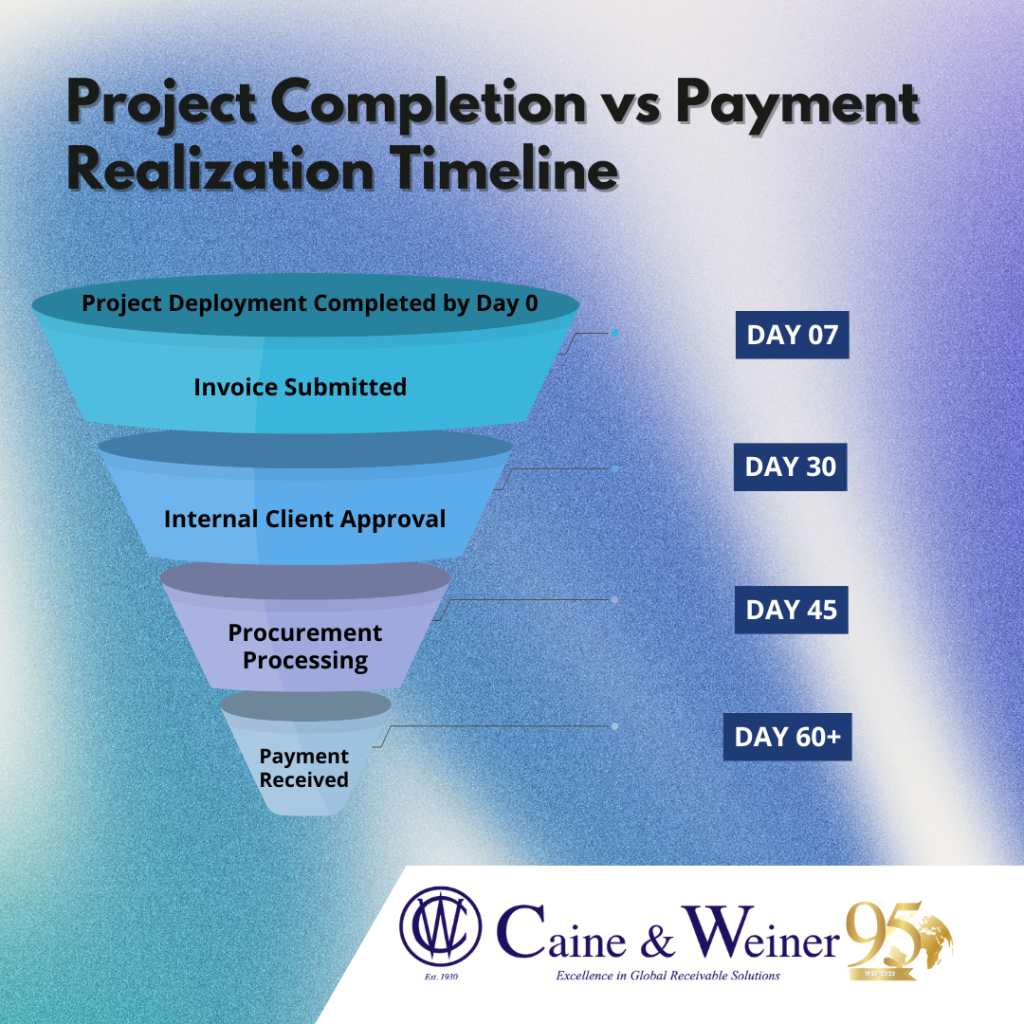
This challenge becomes more significant as project volume scales. Delayed receivables don’t just affect accounting—they can influence hiring, contractor scheduling, hardware procurement, and delivery speed.
CFO.com recently noted that slow decisions and layered approvals can materially reduce topline performance, reinforcing how operational delays often create larger strategic consequences (CFO.com). In IT services, those delays can quietly force firms into more defensive choices:
- Pause expansion
- Delay engineering hires
- Reduce purchasing flexibility
A business may appear successful externally while internally managing uncertainty.
Early Intervention Protects Relationships—and Revenue
Most enterprise payment slowdowns are not caused by refusal. They’re typically driven by:
- Procurement bottlenecks
- Invoice mismatches
- Approval silos
- Documentation errors
This is why early receivables strategy matters.
Addressing friction early can preserve client relationships while protecting working capital before aging intensifies. According to multiple credit management studies, businesses that intervene earlier often experience significantly better recovery outcomes than those waiting for deeper delinquency.
This is where firms like Caine & Weiner become valuable—not as aggressive collectors, but as strategic partners helping technology companies protect liquidity while preserving brand trust.
The Bottom Line
In computer integrated systems design, success isn’t defined solely by winning larger contracts.
It’s defined by converting completed work into predictable cash flow.
Because payroll, infrastructure, and growth aren’t funded by signed statements of work.They’re funded by payment precision.
For IT consulting and systems leaders, the greatest hidden risk may not be losing projects—It may be allowing payment delays to quietly erode the very momentum those projects were meant to create.