
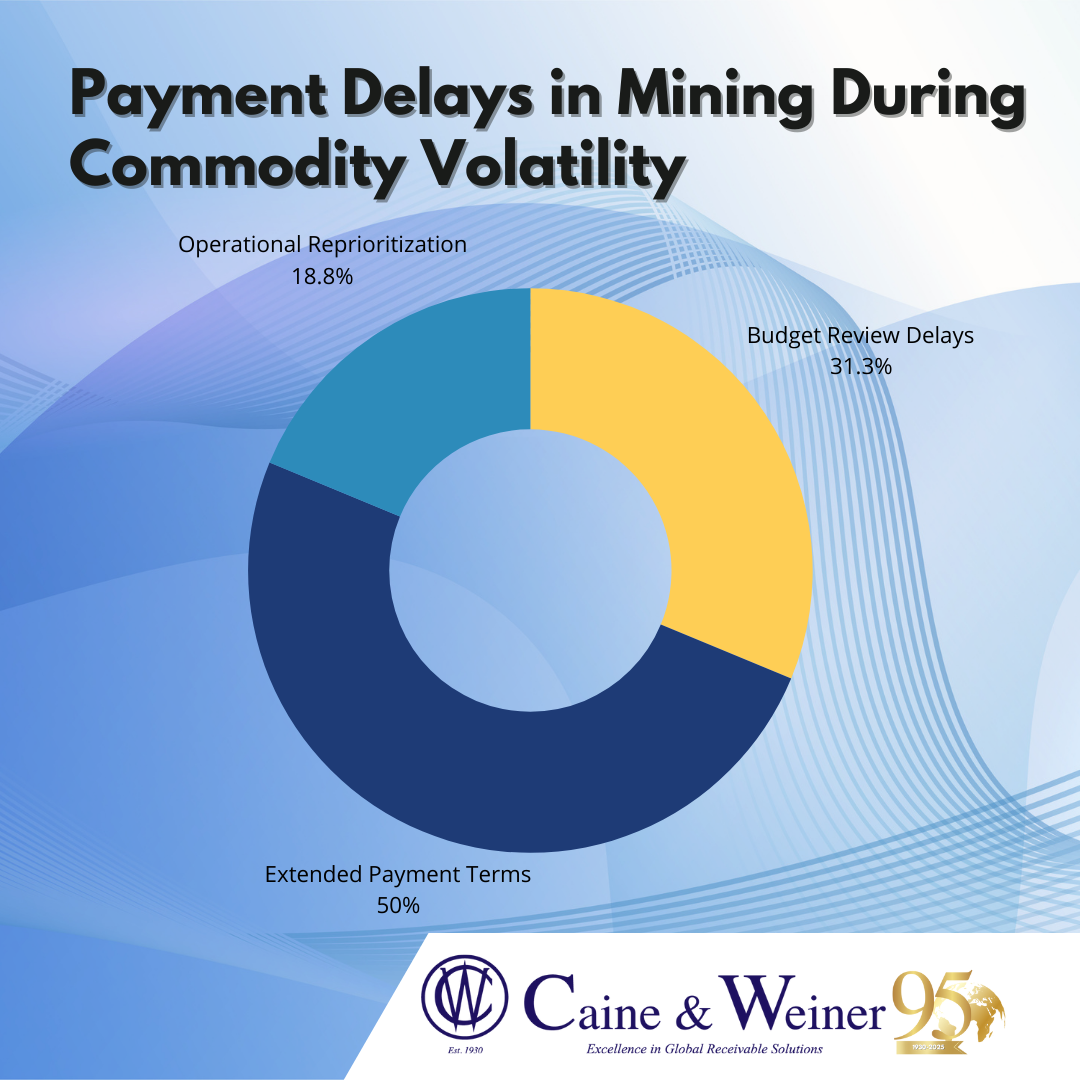
Payment behavior in the mining industry doesn’t follow invoices—it follows the commodity market.
When copper, lithium, coal, or nickel prices swing, the entire financial structure of mining companies shifts with them. Production priorities change. Capital allocation changes. Cash reserves get reassigned to critical operations.
And vendors feel the effects—fast.
Industry analytics reveal a clear pattern:
When commodity volatility spikes, mining companies extend payment terms by 30–50%.
Not because they’re unwilling to pay.
Not because they dispute the work.
But because cash follows production, not paperwork.
A Story from Inside the Mine
Consider a supplier providing parts to a mid-sized mining operation.
For months, payments arrive like clockwork.
Then commodity markets shift—fast.
Copper prices fall 18% in a single quarter.
Suddenly:
Capex freezes.
Replacement part orders slow.
Managers redirect budgets.
Operational leaders start approving only production-critical expenses.
Meanwhile, AP teams receive new instructions:
“Extend payment cycles where possible.”
“Prioritize equipment purchases related to output.”
Your invoice—perfectly valid, perfectly accurate—quietly moves down the list.
By the time payment arrives, 45 days becomes 75.
75 becomes 90.
And sometimes longer.
The invoice didn’t stop mattering.
It just stopped being urgent.

The Data Behind Mining Payment Behavior
Mining is one of the most cyclical industries in the world.
That means payment behavior is cyclical too.
- Payment terms stretch 30–50% during high-volatility cycles.
When commodity prices fall, companies redirect cash toward:
- Extraction
- Processing
- Labor
- Equipment maintenance
Invoices not tied to immediate production slow first.
- AP backlog spikes 20–32% during downturns.
Mining companies process fewer invoices per cycle during volatility.
Internal resources shift to financial planning and cost control.
- OPEX prioritization replaces normal payment cycles.
If equipment or production is at risk, payments to vendors take a back seat—regardless of historical reliability.
- Budget reviews increase by 2–3× in volatile markets.
More reviews = delayed approvals.
Delayed approvals = payment drift.
- Role transitions occur during both expansions and contractions.
Leadership shifts.
Operational managers rotate.
Approval paths change without notice.
Invoices sit idle until structure stabilizes.
Caine & Weiner helps vendors recognize payment risk signals early—especially in industries shaped by market cycles, like mining.
The goal isn’t pressure.
It’s clarity, timing, and strategy.